Community Impact
The Benefit Sharing Problem: Why Carbon Revenue Rarely Reaches Communities
NaturaLedger Research · · 7 min read
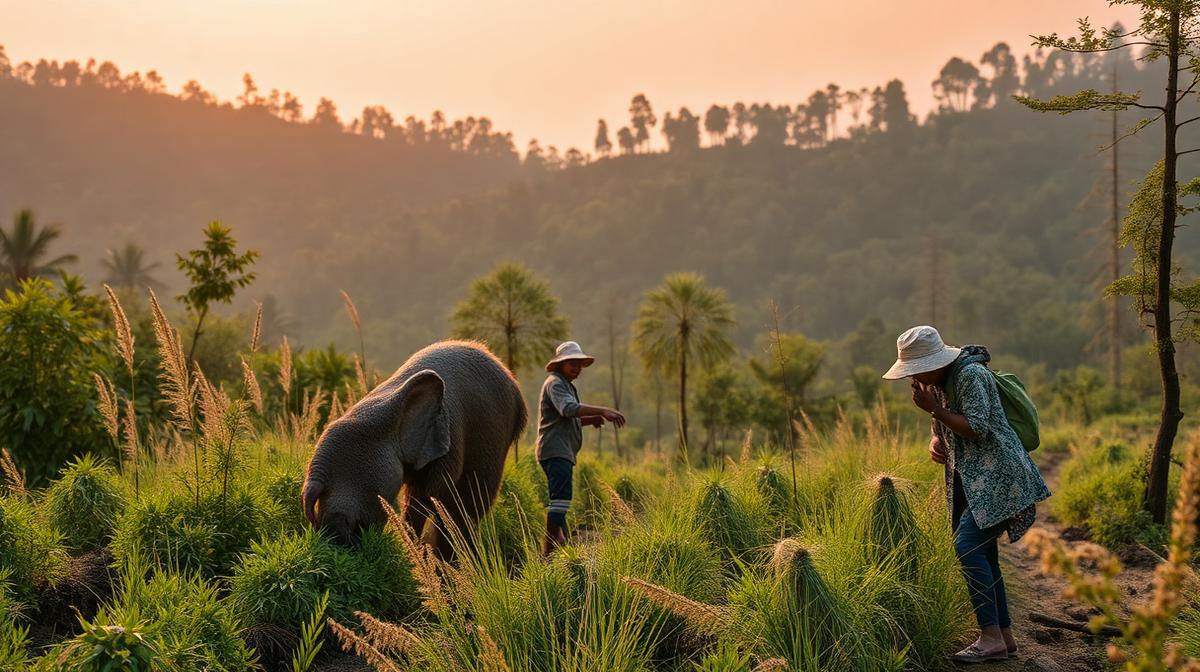
In 2025, over $1 billion worth of carbon credits were retired globally, according to Sylvera's market analysis. A significant portion of these credits came from nature-based projects — REDD+ avoided deforestation, afforestation and reforestation (ARR), and improved forest management (IFM) — located in developing countries where local communities play a direct role in protecting forest ecosystems.
Yet the question that every DFI, every impact investor, and increasingly every corporate buyer asks is: how much of this revenue actually reaches the communities?
The Current Reality
Most carbon projects are structured as follows: a project developer (often a foreign entity or international NGO) secures land rights or community agreements, develops the Project Design Document (PDD), pays for VVB validation, and manages the registry submission. The project developer typically retains 60-80% of carbon revenue to cover costs and generate returns. A local partner or NGO receives 10-20%. The community — the people who physically protect the forest, patrol for fires, and manage the land — often receives 5-10%, sometimes less.
This isn't necessarily exploitative. Project development costs are real and substantial. VVB fees, registry fees, satellite data, field equipment, and legal costs can exceed $500,000 before a single credit is issued. Project developers take real financial risk.
But the opacity of these arrangements creates problems. Communities often don't know what carbon credits are worth. Payment timelines are unpredictable. And there's no standardized way for a DFI or investor to verify that community payments actually occurred.
Why This Matters for Market Integrity
The ICVCM's Core Carbon Principles, which are becoming the de facto quality standard for voluntary carbon markets, explicitly include safeguards and sustainable development criteria. Carbon credit buyers — particularly European corporates preparing for CSRD reporting — increasingly require evidence that projects deliver genuine community co-benefits, not just tonnes of CO2 avoided.
Greenwashing investigations by media organizations have repeatedly targeted the gap between claimed community benefits and actual payments. When a buyer pays $15 per tonne for a REDD+ credit marketed as 'community forest protection,' they expect communities to be meaningfully involved and compensated.
Technology-Enabled Transparency
The benefit sharing problem isn't primarily about bad actors. It's about infrastructure. Most carbon projects manage community payments through manual bank transfers, cash distributions, or NGO intermediaries — with limited auditability and significant delays.
Three technology layers can transform this:
Automated revenue distribution: automated splitting of carbon revenue according to pre-agreed terms, with digital proof of each calculation. The terms are configurable per project — there is no single 'correct' percentage — but the distribution is transparent and verifiable.
Mobile money integration: direct payments to community members via Orange Money, MTN Mobile Money, PIX, or other local payment networks. No banking infrastructure required. No intermediary handling cash.
Impact tracking with SDG mapping: geolocated photographic evidence of community actions (school construction, health center funding, water infrastructure) linked to carbon revenue sources and mapped to UN Sustainable Development Goals.
When a DFI asks 'show me where my money went,' the answer shouldn't be a PDF report produced 18 months later. It should be a real-time dashboard showing every payment, every community action, and every piece of evidence — verifiable by anyone with access.
Sources: Sylvera State of Carbon Credits 2025; ICVCM Core Carbon Principles Assessment Framework; Verra VCS Safeguards Requirements; REDD+ Safeguards Information System Guidelines.